Unstructured free play for kids is essential because it fosters critical life skills such as creative problem solving, social empathy, and emotional resilience through child-led exploration. These open-ended experiences promote healthy cognitive development and physical literacy; furthermore, they provide children with the freedom to navigate challenges and interact with peers in a self-directed way.
Modern childhood often feels like a series of scheduled appointments, leaving many parents worried that their children are missing out on the simple joy of discovery. Between structured soccer practices and the magnetic pull of digital screens, the opportunity for a child to simply be a child is becoming increasingly rare. At Lollipops Indoor Playground, we believe that this self-directed time is not just a break from learning; it is where the most profound development occurs. In this guide, we will explore the essential benefits of unstructured free play, ranging from improved social intelligence to physical agility. You will discover how to balance screen time with active movement, why our specialized Orlando environment fosters these skills, and practical ways to encourage independent play without over-directing the experience.
Defining Unstructured Free Play for Kids
Unstructured free play for kids is defined as child-led, open-ended activity that lacks adult-imposed rules or specific, pre-determined outcomes. While structured activities like soccer practice or board games provide valuable lessons in following directions, they differ fundamentally from the organic exploration found in free play. In an organized sport, a coach dictates the movement and the goal; in free play, the child decides where to go, what to build, and how to interact with their surroundings.
Many Orlando parents prioritize extracurriculars to give their children a developmental head start, yet the most critical hidden work of growth occurs when kids are left to their own devices in a safe, stimulating environment. For preschoolers in particular, this type of exploration is their primary job. It is the essential mechanism for healthy brain development, allowing them to experiment with cause and effect, social dynamics, and spatial relationships without the fear of making a mistake.
Providing this space at a dedicated children’s entertainment facility allows kids to engage in the high-level cognitive task of self-direction. Within our indoor play services, the environment is designed to spark curiosity. By removing the pressure of winning or completing a task, we allow the child's imagination to take the lead, fostering a sense of agency that structured schedules simply cannot replicate.
The 10 Developmental Benefits of Active Play
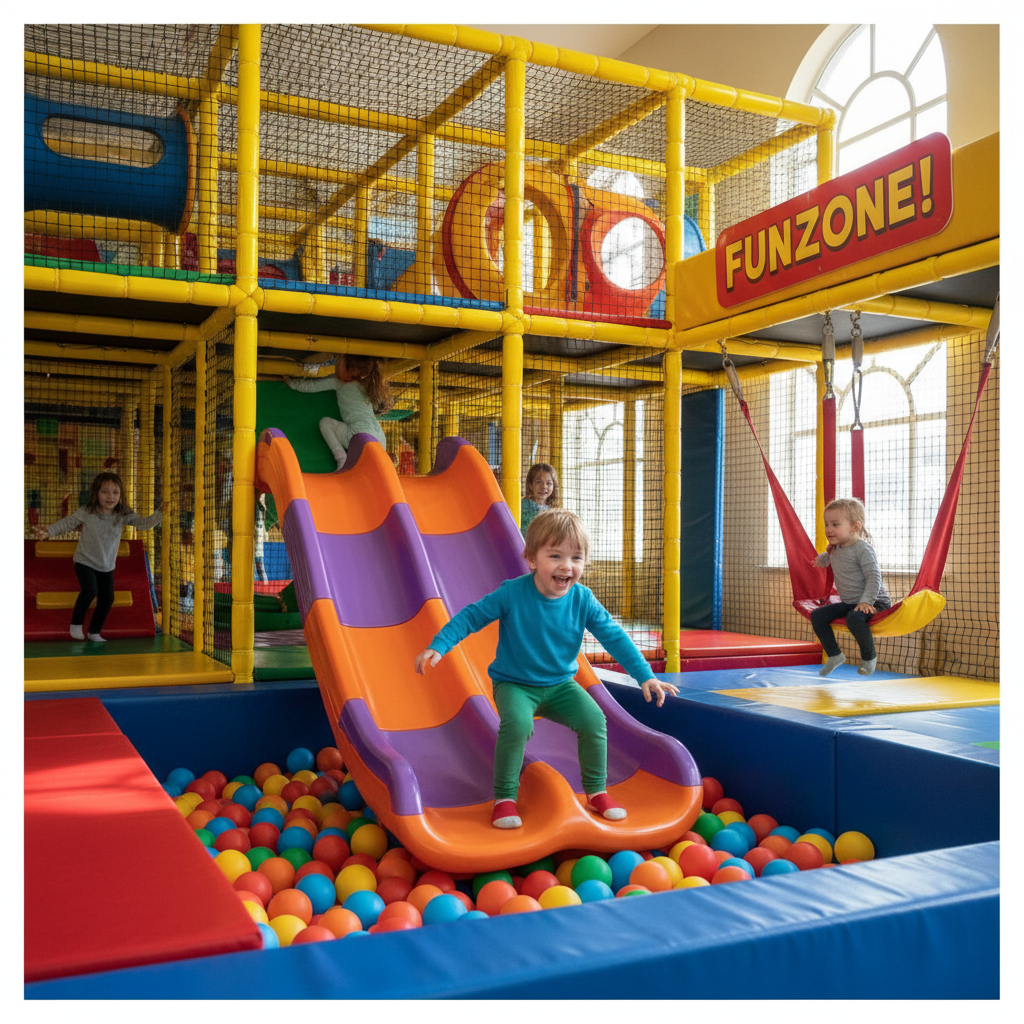
This self-direction serves as the foundation for a wide array of developmental milestones. While parents often see a child navigating a ball pit as simple fun, developmental experts view it as a complex full-body workout for the brain and body. Within our facility, we observe how unstructured free play for kids translates into ten distinct developmental advantages:
Cognitive Growth: Exploring unfamiliar 3D environments forces the brain to create new neural pathways for spatial mapping.
Physical Health: The constant movement required by indoor equipment builds cardiovascular stamina and bone density.
Emotional Regulation: Play allows children to experience and manage intense emotions like excitement or frustration in a safe setting.
Social Skills: Interacting with new peers requires children to read non-verbal cues and negotiate shared space.
Creativity: Without a script, a climbing structure easily transforms into a mountain or a space station in a child's mind.
Resilience: Falling safely or needing a second attempt at a slide teaches kids that failure is a temporary part of learning.
Problem Solving: Figuring out the most efficient path through a multi-level obstacle course builds critical thinking.
Independence: Moving away from a parent's side to explore a tunnel fosters a sense of autonomous agency.
Motor Development: Climbing walls target gross motor strength, while interactive wall panels refine fine motor coordination.
Stress Reduction: Vigorous physical activity lowers cortisol levels, helping kids process daily stresses.
An indoor playground facilitates these benefits more intensely than a typical Orlando backyard. While a residential swing set offers familiar, repetitive motions, our indoor play services provide high-density sensory experiences. A ball pit, for example, offers unique proprioceptive input; the deep pressure of the balls against the body helps a child's nervous system understand body boundaries. Climbing structures with varied textures and vertical heights challenge the vestibular system in ways that flat ground cannot. Because our equipment is engineered for diverse movements, children are pushed to use muscle groups and cognitive strategies they rarely engage at home. This concentrated variety is also why Lollipops is a preferred venue for private events and parties; the environment provides constant stimulation that keeps children engaged in deep play far longer than a standard outdoor play area.
The Screen Time Dilemma: Active Play vs Digital Consumption
Modern childhood is increasingly defined by glowing rectangles. CDC research highlights a concerning trend: as digital consumption rises, physical activity levels tend to plummet. For many young children, screen time has become a primary sedentary activity, often displacing the vigorous movement required for healthy growth. This passive engagement lacks the physical resistance and sensory feedback necessary for true motor development; it is a two dimensional solution to a three dimensional developmental need.
Unstructured free play for kids serves as the essential antidote to this digital saturation. While a tablet offers a flat, predictable experience, a dedicated children’s entertainment facility provides a complex world where consequences are physical and immediate. When a child navigates our climbing structures or judges the distance to the next step, they are developing spatial awareness that no app can replicate. They are learning to map their own bodies in relation to their environment, a skill critical for everything from handwriting to coordinated sports later in life.
Furthermore, digital consumption is often a solitary or one way interaction. In our indoor play services, children must engage in constant, real time communication. They learn to read facial expressions, interpret body language, and negotiate physical boundaries in a way that 2D avatars do not require. Moving through a 3D space requires a child to be present and reactive, forcing the brain to process complex environmental data. This active engagement ensures that the child is an active participant in their world rather than a spectator, building the neural foundations that passive media consumption simply leaves untouched.
How Free Play Builds Vital Social Skills
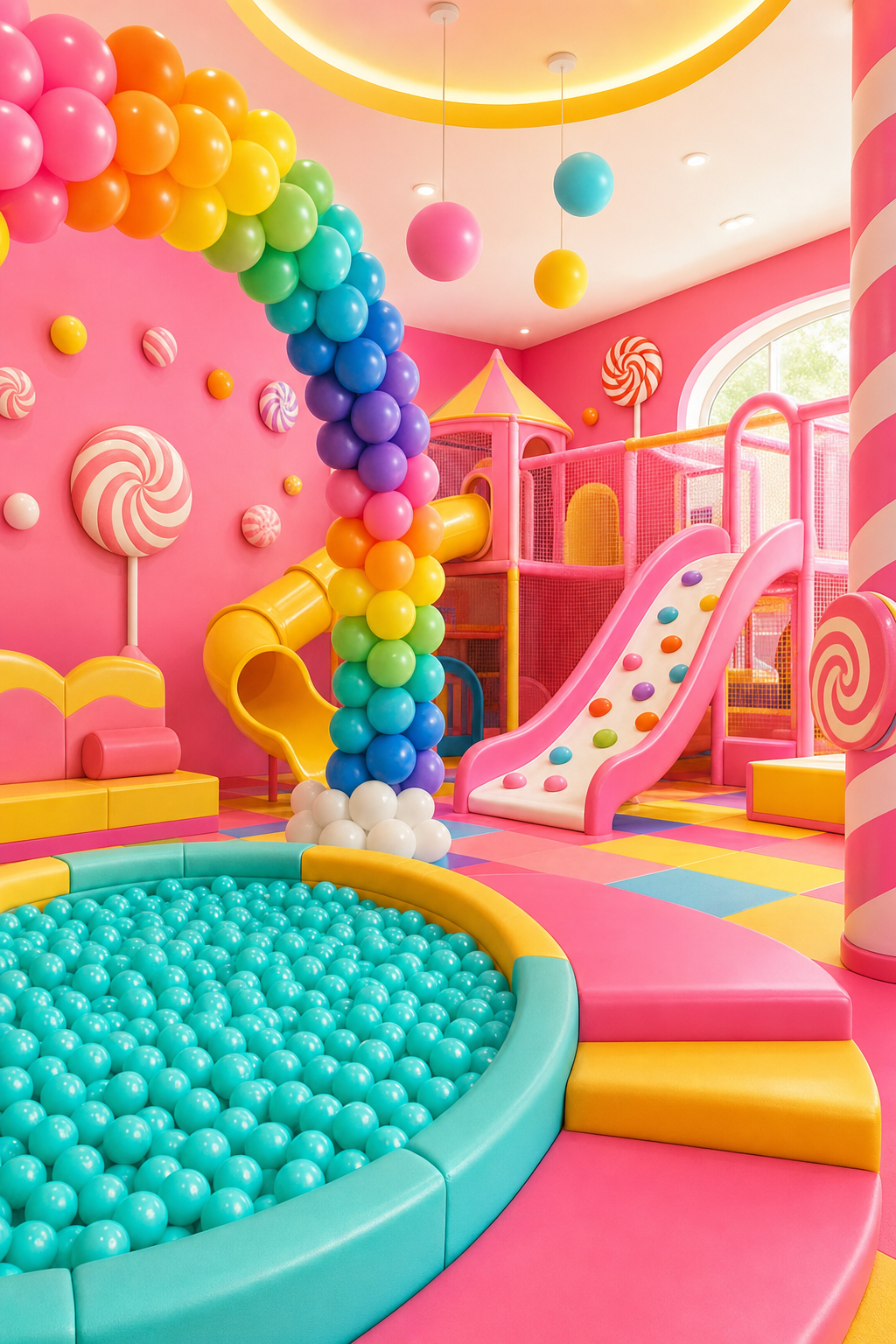
While screen time often isolates, unstructured free play for kids serves as a high stakes social laboratory. Within our facility, children naturally progress through the three primary stages of social development: parallel, associative, and cooperative play. Initially, younger toddlers engage in parallel play, where they occupy the same space and use similar equipment without direct interaction. As they mature, they transition into associative play, sharing the same area and perhaps mimicking each other's movements on the climbing structures. Eventually, they reach the complex stage of cooperative play, where they negotiate roles and work together toward a shared goal, such as a group mission through an obstacle course.
At a dedicated children’s entertainment facility, these interactions happen organically without the constant mediation of an adult coach or teacher. When a child encounters a peer at the top of a slide, they must navigate the logistics of turn taking and personal space in real time. This environment requires them to practice empathy; they must observe a peer's facial expressions and body language to determine if someone is feeling overwhelmed or excited. This is where true conflict resolution begins. If two children want to occupy the same tunnel, they are forced to communicate, negotiate, and reach a compromise to continue their fun.
Developing these skills during our regular indoor play services creates the essential foundation for successful private events and parties. When children have built the social muscle memory required to share and cooperate, they are much better equipped to handle the high energy environment of a birthday celebration. They learn how to be part of a group, making the experience more enjoyable for everyone involved and reducing the friction that often occurs when children haven't had enough practice in self directed social settings.
The Orlando Parent's Secret: Why Indoor Playgrounds Provide the Best Environment
Living in Central Florida means navigating a climate that often works against outdoor activity. From June through September, the heat index regularly exceeds 100 degrees, creating a legitimate risk for heat exhaustion in young children. Even when it is not dangerously hot, the predictable afternoon thunderstorms can cut an hour of park time short in a matter of minutes. These environmental factors make it difficult for families to rely on local parks for consistent physical activity.
A dedicated children’s entertainment facility offers a strategic solution to these barriers. By moving the play experience indoors, families gain access to a climate controlled environment where humidity and rain do not dictate the schedule. This consistency is vital for maintaining a routine of unstructured free play for kids. When a child knows they have a reliable, safe space to run and explore, they are more likely to reach their developmental milestones without interruption.
Unlike public parks where equipment might be scorching hot or damp from recent rain, our indoor play services ensure a clean and tempered environment. Orlando parents often utilize a membership as a tool for daily activity, ensuring their children get the necessary physical output regardless of the weather. This reliability makes our space an ideal choice not just for daily visits, but also for scheduled private events and parties where the forecast cannot be allowed to ruin a celebration.
How Much Unstructured Play Do Preschoolers Need?
Pediatric health organizations generally recommend that preschoolers engage in at least 60 to 120 minutes of active movement every day. For families following developmental frameworks like the 3, 3, 3 rule, which suggests balancing three hours of active play with three hours of focused learning and three hours of social connection, meeting these benchmarks can feel daunting within a standard home environment.
This is where a dedicated children’s entertainment facility becomes an efficiency tool for parents. Because our indoor play services offer a high density of physical challenges, a single two hour visit often provides more vigorous movement than an entire afternoon of sedentary time at home. The vertical nature of our structures ensures that unstructured free play for kids involves constant squatting, reaching, and climbing, which maximizes the quality of the activity. By satisfying these daily requirements in a concentrated burst, parents ensure their children reach developmental goals even during busy weeks. These sessions also build the physical stamina required for private events and parties.
Tips for Parents: How to Support Free Play Without Over-Directing
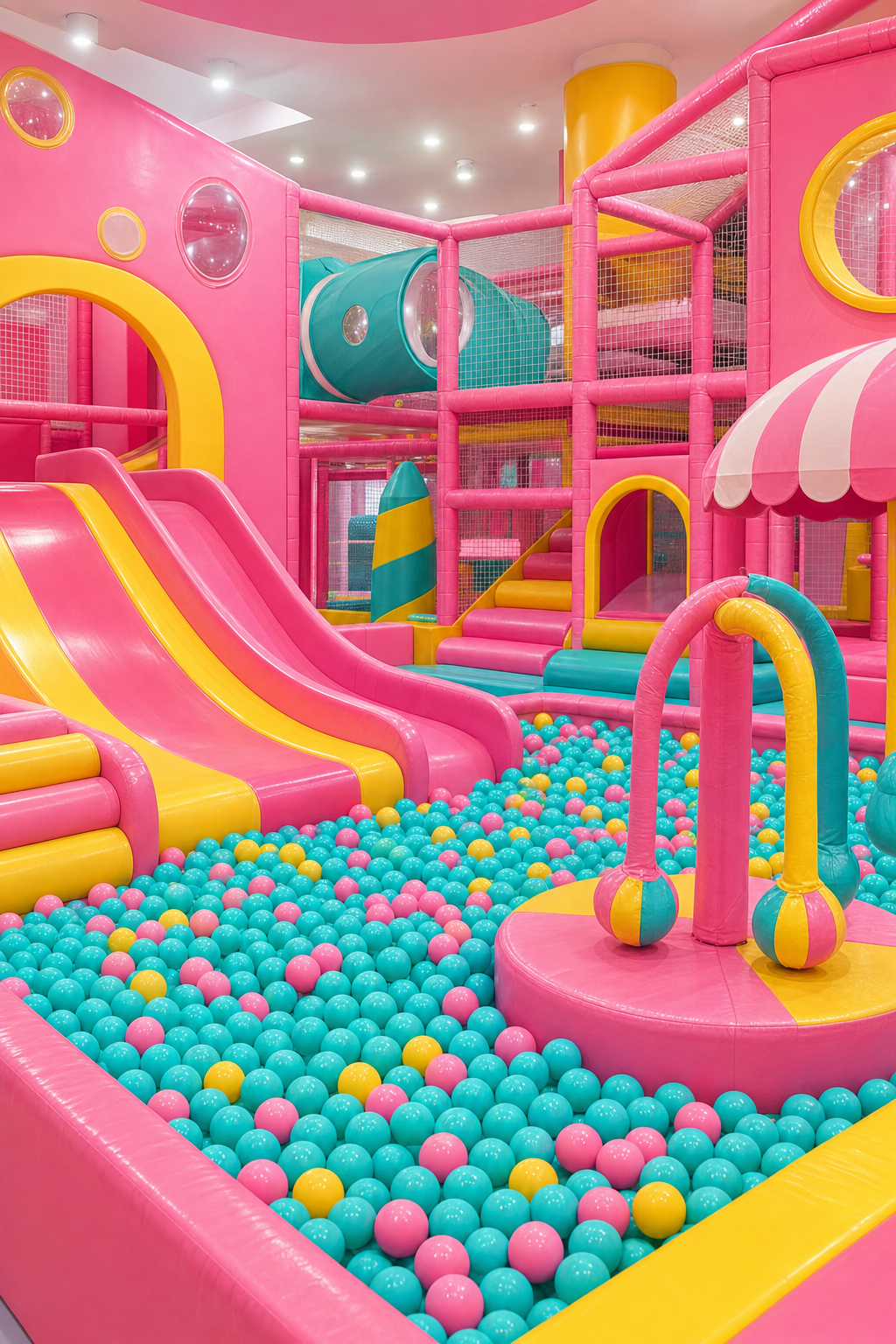
To maximize the benefits of unstructured free play for kids, parents should adopt the bench method. This strategy involves finding a comfortable spot and observing from a distance rather than directing the child's next move. When you visit our dedicated children’s entertainment facility, resist the urge to suggest which slide to use or how to navigate the ball pit. Instead, watch where your child naturally gravitates. A child who repeatedly chooses the climbing structures might be seeking proprioceptive input or testing their physical limits, while one who prefers the sensory variety of our indoor play services might be exploring their creative boundaries.
Only intervene if a safety risk arises or a social conflict escalates beyond the children's ability to resolve it. This passive support allows kids to build confidence in their own decision making and autonomy. These observation skills are particularly useful when planning private events and parties, as you will gain a clearer understanding of the specific activities and environments that truly engage your child's unique personality and developmental needs.